
















Crystal Travel | Travel News | April 2026
Japan Airlines has partnered with tech firm GMO Internet Group to begin trialling humanoid robots in live airport operations, marking a significant moment for Japanese aviation and the future of air travel worldwide.
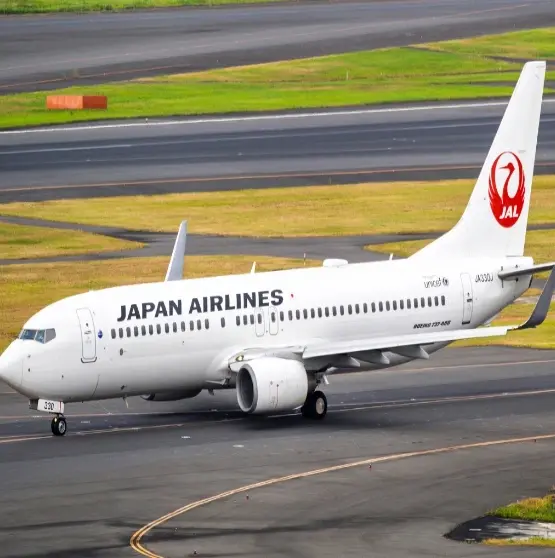
Travellers passing through Tokyo's Haneda Airport may soon notice something rather extraordinary on the tarmac. Japan Airlines (JAL), in partnership with GMO AI & Robotics, has announced a landmark trial deploying humanoid robots to assist with ground handling operations, beginning May 2026. It is the first initiative of its kind in Japan and has quickly captured the attention of the global aviation industry.
For British travellers — many of whom pass through Haneda on long-haul trips to Japan — this is a development well worth knowing about.
The experiment will take place at Haneda Airport, Japan's busiest airport, located just a short distance from central Tokyo. Rather than introducing robots all at once, JAL has opted for a careful, phased approach — beginning with controlled testing before gradually bringing the machines into live operations alongside existing ground staff.
The choice of humanoid robots is deliberate. Unlike conventional airport machinery designed for a single fixed task, humanoid robots are built to move like people — with arms, legs, and flexible joints. This means they can operate within existing airport infrastructure without requiring costly redesigns or structural changes to facilities.
Initially, the robots will assist with loading and unloading passenger baggage. JAL has indicated that the scope could eventually expand to include aircraft cabin cleaning and the operation of Ground Support Equipment — the specialised vehicles used to service aircraft between flights.
This trial is a direct response to a growing crisis in Japan's workforce. The country faces a well-documented demographic challenge — an ageing population and a shrinking number of working-age people, at a time when inbound tourism is rising sharply.
Ground handling is among aviation's most physically demanding roles. Staff must lift heavy luggage, operate bulky equipment in tight spaces, and work across all weather conditions — all while maintaining the high standards of precision that keep flights safe and punctual. Recruiting and retaining enough skilled workers for these roles is becoming increasingly difficult.
Yoshiteru Suzuki, President of JAL Ground Service, has been clear that the aim is to ease the burden on existing staff, not to replace them. Safety-critical responsibilities, such as aircraft marshalling and operational oversight, will remain firmly in human hands throughout.
Travellers flying through Haneda are unlikely to notice dramatic changes immediately. The robots are being introduced gradually, working alongside human crews as a support rather than a substitute. However, if the trial proves successful, the long-term benefits could be felt by every passenger — faster baggage handling, quicker aircraft turnarounds, cleaner cabins, and more reliable departure times.
It is also worth noting that automation in ground handling is a growing global trend. What makes JAL's approach distinctive is the use of fully humanoid robots capable of handling multiple tasks, going notably further than the single-function automated equipment currently seen at many airports around the world.
Japan has long been a world leader in robotics and technological innovation, and this trial at one of its flagship airports is a natural extension of that reputation. For UK holidaymakers, it is an encouraging sign that the airports serving their favourite long-haul destination are investing in smarter, more efficient operations.
Planning a trip to Japan? Speak to our expert travel consultants at Crystal Travel and let us help you create the perfect itinerary.
Verified by Our Travel Operations Expert



Got Questions? Call us 24/7!
02030237773
Email for Us!
support@crystaltravel.co.uk
12 Stephen Mews, London W1T 1AH, United Kingdom.

Copyright © 2026 Moresand Ltd.(Reg No.02114691) T/A CrystalTravel registered in England and Wales.
Many of the flights and flight-inclusive holidays on this website are financially protected by the ATOL scheme. But ATOL protection does not apply to all holiday and travel services listed on this website. Please ask us to confirm what protection may apply to your booking. If you do not receive an ATOL Certificate then the booking will not be ATOL protected. If you do receive an ATOL Certificate but all the parts of your trip are not listed on it, those parts will not be ATOL protected. If you have booked a flight only where the ticket is not issued immediately, your flight will be protected under our ATOL. Please see our booking conditions for information, or for more information about financial protection and the ATOL Certificate go to ATOL Certificate