














Crystal Travel | Travel News | May 2026
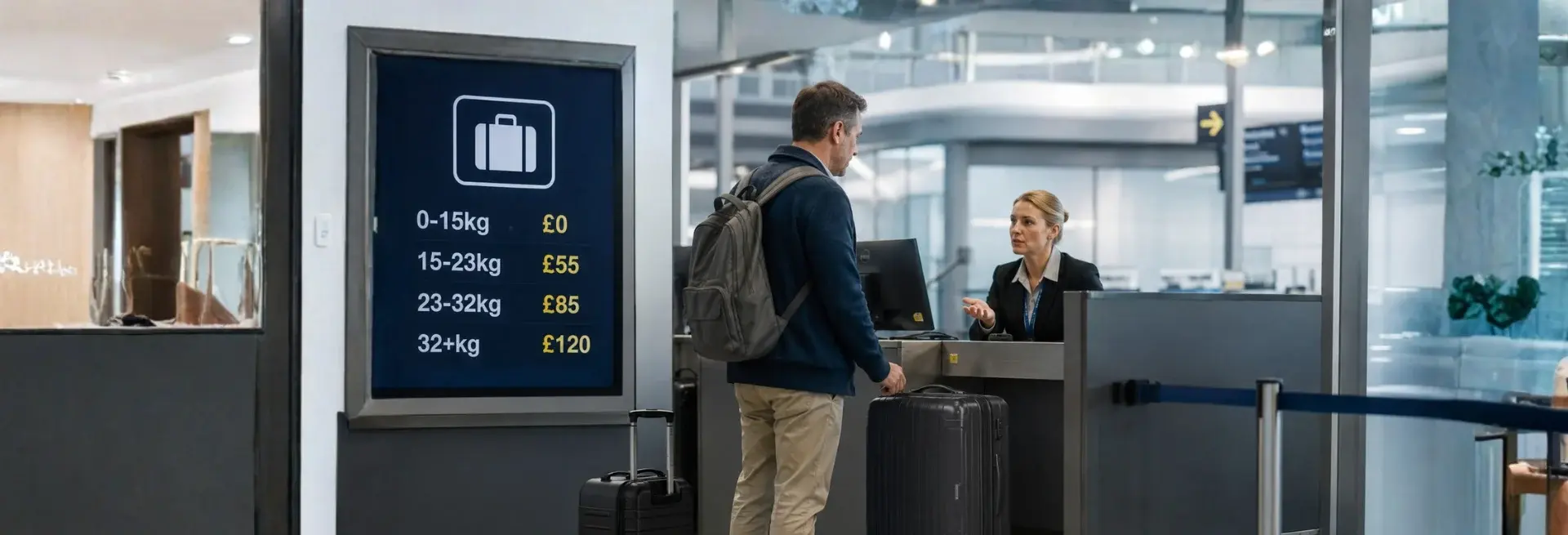
Ryanair, easyJet, British Airways, Lufthansa, Delta, United, and other airlines are all increasing baggage charges in 2026 as a fuel crisis pushes airlines to pass rising costs onto passengers.
Flying is getting more expensive — and not just at the ticket counter. A deepening fuel crisis, driven by geopolitical conflict in the Middle East and significant disruption to global oil supply routes, has sent jet fuel prices surging to levels not seen in years. Since fuel makes up roughly 30% of any airline's total operating costs, carriers across Europe and North America have responded by increasing ancillary charges, with checked baggage fees bearing the brunt.
The situation has moved quickly. What began as isolated fee adjustments by individual airlines has now become an industry-wide shift, with major carriers on both sides of the Atlantic raising prices within weeks of one another.
The increases span both budget and full-service airlines. In Europe, Ryanair has implemented around a 15% increase in its checked baggage fees, with airport prices remaining the most costly option for passengers who have not pre-booked their luggage. EasyJet has similarly adjusted its hold luggage charges and continues to apply surcharges for overweight bags. British Airways has raised its checked baggage fees by approximately 5% compared to last year, while Lufthansa has also revised its fee structure in response to higher operating costs.
Across the Atlantic, the changes have been equally swift. Delta, United, American Airlines, Southwest, and JetBlue all raised their checked baggage fees within a short period in early 2026, marking one of the most rapid industry-wide pricing moves in recent memory. Air Canada has followed a similar path as fuel pressures continue to weigh on North American carriers.
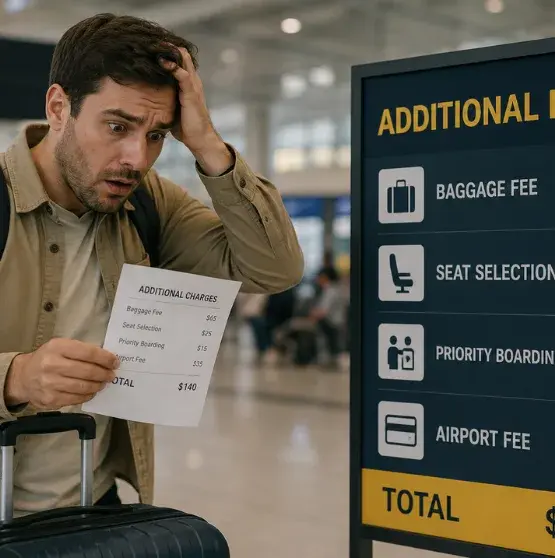
One of the biggest frustrations for passengers is that baggage fees rarely appear in the headline fare. Most travellers book based on the advertised ticket price, only encountering the full cost of their journey when they add luggage — or worse, when they arrive at the airport without having pre-booked it.
Gate fees and last-minute airport charges are consistently higher than those booked in advance, sometimes significantly so. For budget airlines in particular, the gap between the advertised fare and the total cost of travel — once bags, seat selection, and other extras are added — can be considerable.
Experts have also noted that once baggage fees are raised, they rarely return to previous levels, even after the immediate pressures that caused the increase have eased.
British travellers heading to popular destinations such as Spain, France, and the United States are among those most affected, given the volume of passengers on these routes. Families travelling with multiple bags face the sharpest overall increase in costs, particularly when charges have not been built into the travel budget from the outset. Budget-conscious travellers who rely on low base fares may find the true cost of their trip is considerably higher than expected.
There are practical steps every traveller can take. Always add baggage at the time of booking rather than waiting until you reach the airport, where fees are consistently higher. Check whether your ticket type, loyalty status, or airline credit card entitles you to free or discounted baggage allowances before assuming you will be charged. If you can travel with a compliant cabin bag only, this remains the most reliable way to avoid checked baggage costs altogether. Most importantly, always review the full baggage policy of your chosen airline before confirming your booking.
As baggage fees rise, UK travellers should check the full cost of their flight before booking, not just the headline fare. Pre-booking luggage and reviewing airline baggage rules early can help avoid costly surprises at the airport.
Verified by Our Travel Operations Expert



Got Questions? Call us 24/7!
02030237773
Email for Us!
support@crystaltravel.co.uk
12 Stephen Mews, London W1T 1AH, United Kingdom.

Copyright © 2026 Moresand Ltd.(Reg No.02114691) T/A CrystalTravel registered in England and Wales.
Many of the flights and flight-inclusive holidays on this website are financially protected by the ATOL scheme. But ATOL protection does not apply to all holiday and travel services listed on this website. Please ask us to confirm what protection may apply to your booking. If you do not receive an ATOL Certificate then the booking will not be ATOL protected. If you do receive an ATOL Certificate but all the parts of your trip are not listed on it, those parts will not be ATOL protected. If you have booked a flight only where the ticket is not issued immediately, your flight will be protected under our ATOL. Please see our booking conditions for information, or for more information about financial protection and the ATOL Certificate go to ATOL Certificate