

 29 Jul, 2026
Jet2 Summer 2027: New Routes from Bournemouth, Stansted and Jersey
29 Jul, 2026
Jet2 Summer 2027: New Routes from Bournemouth, Stansted and Jersey

Crystal Travel | Travel News | 18 April 2026
From rerouted flights to rising fares, everything you need to know about the Iran airspace situation.
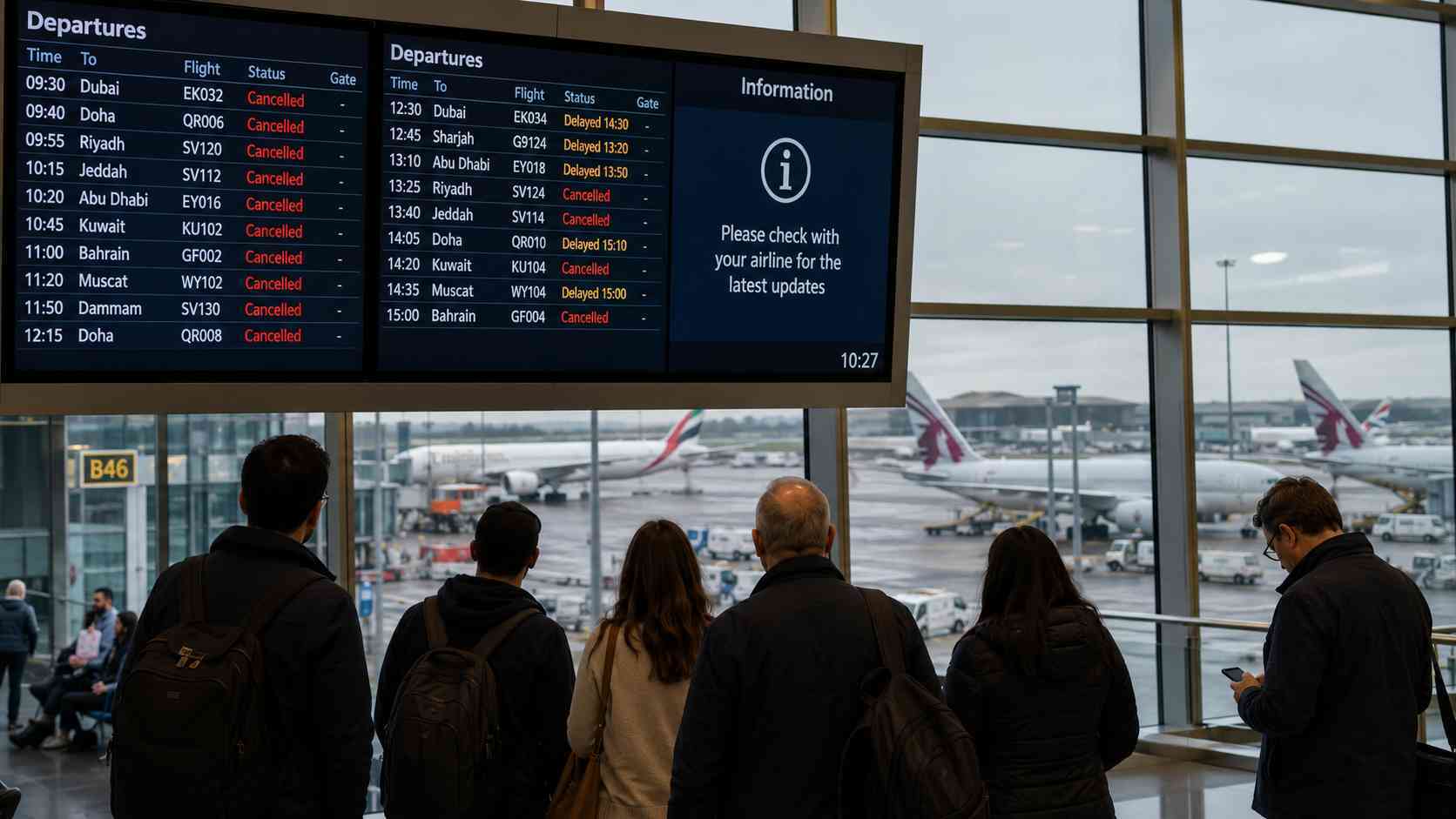
Iran has officially reopened parts of its airspace to international transit flights, marking a cautious step toward restoring regional aviation following weeks of conflict and disruption across the Middle East. However, despite the official clearance, the world's major airlines are not rushing back — and for travellers, the impact is being felt in the form of longer flights, rising fares, and continued uncertainty.
Iran's Civil Aviation Organisation announced that air routes in the eastern portion of the country are now open to international transit flights, with airports also resuming limited operations in phases. The move follows a ceasefire agreement that paused weeks of conflict triggered by military escalation in the region earlier this year. Authorities have been clear that the resumption is being managed gradually, with the pace of recovery depending on the readiness of both civilian and military infrastructure.
It is an important symbolic step — but on its own, it has not been enough to bring international carriers back to their usual routes.
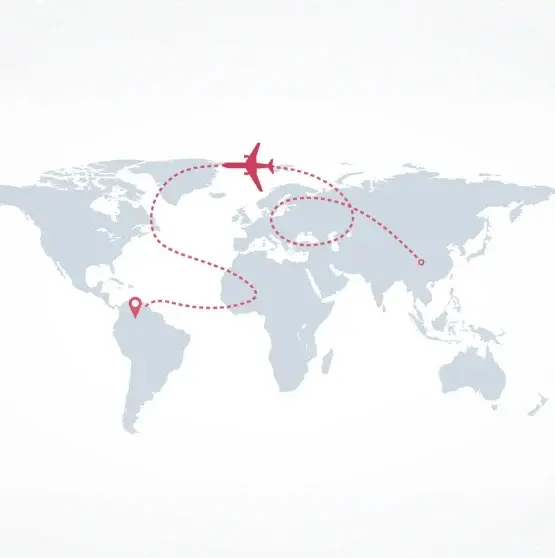
Hours after the announcement, flight tracking platforms showed that Iranian airspace remained largely empty of international traffic. Major carriers across Europe and beyond are continuing to avoid the corridors, rerouting flights over neighbouring countries instead. The detours are significant, with aircraft taking longer paths through alternative airspace to reach their destinations.
This caution is not simply a matter of preference. Airlines rely on independent safety assessments from international civil aviation regulators, not just on national announcements. Until those bodies formally revise their guidance and validate conditions over Iran as safe and stable, most carriers are unlikely to resume operations through the region. Operational factors also play a role — reintroducing a flight route involves considerable planning, from recalculating fuel loads to adjusting crew schedules and securing approvals from multiple authorities. None of that happens overnight.
The broader context matters too. International aviation has had a difficult few years navigating restricted airspace across various parts of the world, and carriers have become accustomed to making cautious, evidence-based decisions before returning to previously disrupted routes.
The disruption is real and tangible for passengers, particularly those travelling between Europe and Asia. Flights that would ordinarily follow a direct path through the Middle East are now taking significantly longer alternative routes, adding extra hours to journey times on a range of popular long-haul services. That additional flying time translates directly into higher fuel costs for airlines, and those costs are increasingly being passed on through higher fares and reduced availability on certain routes.
Travellers with upcoming bookings to Gulf destinations, South Asia, or Southeast Asia may notice longer-than-usual journey times or altered routing on their itineraries. Those booking new trips are advised to check the latest airline schedules carefully and build in extra time when connecting through regional hubs, which have also faced varying levels of disruption in recent weeks.
The situation remains fluid. A full return to normal depends not just on Iran's airspace remaining open, but on the ceasefire holding, diplomatic efforts continuing to make progress, and international aviation bodies updating their guidance accordingly. Any setback in those areas could quickly reverse the limited progress made so far.
At Crystal Travel, our team is keeping a close eye on developments across the region. If you have an upcoming booking or are planning travel to affected destinations and would like guidance, our specialists are here to help.
Verified by Our Travel Operations Expert
 29 Jul, 2026
Jet2 Summer 2027: New Routes from Bournemouth, Stansted and Jersey
29 Jul, 2026
Jet2 Summer 2027: New Routes from Bournemouth, Stansted and Jersey
 29 Jul, 2026
EasyJet Launches New UK Winter Routes for 2026/27
29 Jul, 2026
EasyJet Launches New UK Winter Routes for 2026/27
 29 Jul, 2026
UK Saudi Arabia Travel Advice & Gulf Flight Suspensions 2026
29 Jul, 2026
UK Saudi Arabia Travel Advice & Gulf Flight Suspensions 2026
 29 Jul, 2026
Gulf Air Bahrain to Kuala Lumpur Flights for F1 2026
29 Jul, 2026
Gulf Air Bahrain to Kuala Lumpur Flights for F1 2026
 29 Jul, 2026
Cathay Pacific Expands A350 Network from Hong Kong in 2026
29 Jul, 2026
Cathay Pacific Expands A350 Network from Hong Kong in 2026


Got Questions? Call us 24/7!
02030237773
Email for Us!
support@crystaltravel.co.uk
12 Stephen Mews, London W1T 1AH, United Kingdom.

Copyright © 2026 Moresand Ltd.(Reg No.02114691) T/A CrystalTravel registered in England and Wales.
Many of the flights and flight-inclusive holidays on this website are financially protected by the ATOL scheme. But ATOL protection does not apply to all holiday and travel services listed on this website. Please ask us to confirm what protection may apply to your booking. If you do not receive an ATOL Certificate then the booking will not be ATOL protected. If you do receive an ATOL Certificate but all the parts of your trip are not listed on it, those parts will not be ATOL protected. If you have booked a flight only where the ticket is not issued immediately, your flight will be protected under our ATOL. Please see our booking conditions for information, or for more information about financial protection and the ATOL Certificate go to ATOL Certificate