


















Crystal Travel | Travel News | April 2026
April sees 573 cancellations and over 6,300 delays as airspace closures, high fuel costs, and regional conflicts disrupt a key aviation corridor.
Air travel across Asia and the Gulf is facing one of its most turbulent periods in recent years. Figures this week point to 573 cancellations and over 6,300 delays logged across a wide network of major hubs, leaving thousands of passengers stranded, missing connections, and scrambling to rebook. For UK travellers with holidays, business trips, or onward connections through the region, the disruption is very real — and it is not expected to ease quickly.
The crisis traces back to late February 2026, when joint US-Israeli strikes on Iranian military targets triggered a chain reaction of airspace closures across Iran, Iraq, Kuwait, Syria, and Bahrain. Almost overnight, three of the world's busiest transfer airports — Dubai International, Doha's Hamad International, and Bahrain International — were either shut or operating at drastically reduced capacity. Dubai briefly closed its airspace entirely on 28 February, only resuming a limited schedule in early March.
Within the first 48 hours of the escalation alone, over 5,000 flight cancellations were documented, creating a chain reaction that affected travellers as far away as Asia and Europe. The immediate shock has since eased to a degree, but the underlying instability remains firmly in place.
The impact on major carriers has been severe. Qatar Airways is currently operating around 80 daily flights — roughly 35 to 40 per cent of its pre-conflict capacity. Emirates and Etihad, while managing to restore a larger portion of their schedules, are also facing continued setbacks as regional instability hinders a full recovery.
Beyond the Gulf, the disruption has spread across Asia's busiest airports. Tokyo, Shanghai, Singapore, Kolkata, and Abu Dhabi have all recorded elevated levels of delays and cancellations in recent days. Carriers including Air China, IndiGo, Batik Air, and FlyDubai are frequently appearing in disruption logs. The cascading disruption has coincided with the Easter holiday period, one of the busiest travel windows of the year for British passengers, leaving thousands stranded, missing connections, and facing unplanned overnight stays at transit hotels.
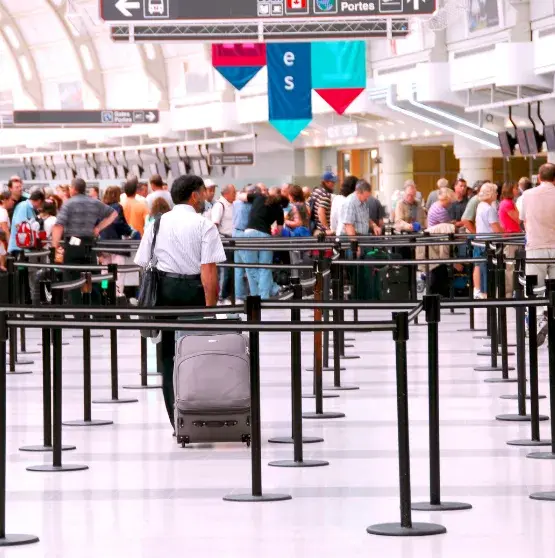
The UK Foreign, Commonwealth, and Development Office has updated its travel guidance due to ongoing disruptions in air travel. Airspace closures and route diversions are severely impacting long-haul connections between Europe, Asia, and Africa. Many airlines have been forced to alter their flight paths to avoid conflict zones, resulting in longer flight times, additional refueling stops, and extra connections. For passengers traveling beyond the Gulf to destinations across South Asia, Southeast Asia, East Africa, or Australasia, the reduced capacity among Gulf carriers has led to fewer available seats and limited rebooking options. The disruption also raises the risk of last-minute schedule changes without sufficient notice. Additionally, with soaring jet fuel costs from the Strait of Hormuz crisis, airlines are passing on the increased operating costs, driving ticket prices up on routes from London to Asia and Africa.
Airlines and travel organisations are urging passengers to take a proactive approach during this period of disruption. Timetables remain subject to late changes, and passengers are being encouraged to monitor their bookings closely, allow longer connection windows at Gulf and Asian hubs, remain flexible with travel dates where possible, and be prepared for last-minute rebooking if their route is further affected.
Travellers are also strongly advised to review their travel insurance policies and ensure their cover includes trip cancellation, significant delays, and any additional accommodation or transport costs that may arise from a disrupted itinerary. Those without adequate cover should seek to arrange it before departing.
The outlook for the coming weeks remains uncertain. While some aviation analysts expect gradual improvement later in Q2 2026, unresolved geopolitical tensions, high fuel prices, and the challenge of repositioning aircraft and crew suggest continued disruption on Asia and Gulf routes. UK travellers with bookings through Gulf hubs or Asian routes are advised to regularly check flight statuses, consult the latest FCDO travel guidance, and contact their travel provider if affected.
Crystal Travel is a UK-based travel agency committed to keeping our customers informed, supported, and safe. If your travel plans have been impacted by the current disruptions, our customer support team is available to assist with rebooking, re-routing, and travel advice.
Verified by Our Travel Operations Expert



Got Questions? Call us 24/7!
02030237773
Email for Us!
support@crystaltravel.co.uk
12 Stephen Mews, London W1T 1AH, United Kingdom.

Copyright © 2026 Moresand Ltd.(Reg No.02114691) T/A CrystalTravel registered in England and Wales.
Many of the flights and flight-inclusive holidays on this website are financially protected by the ATOL scheme. But ATOL protection does not apply to all holiday and travel services listed on this website. Please ask us to confirm what protection may apply to your booking. If you do not receive an ATOL Certificate then the booking will not be ATOL protected. If you do receive an ATOL Certificate but all the parts of your trip are not listed on it, those parts will not be ATOL protected. If you have booked a flight only where the ticket is not issued immediately, your flight will be protected under our ATOL. Please see our booking conditions for information, or for more information about financial protection and the ATOL Certificate go to ATOL Certificate








 02030237773